Wendy Otto · 26 September 2026
Regional Infrastructure Projects Encounter Data Compliance Hurdles Alongside Global Alliance Changes
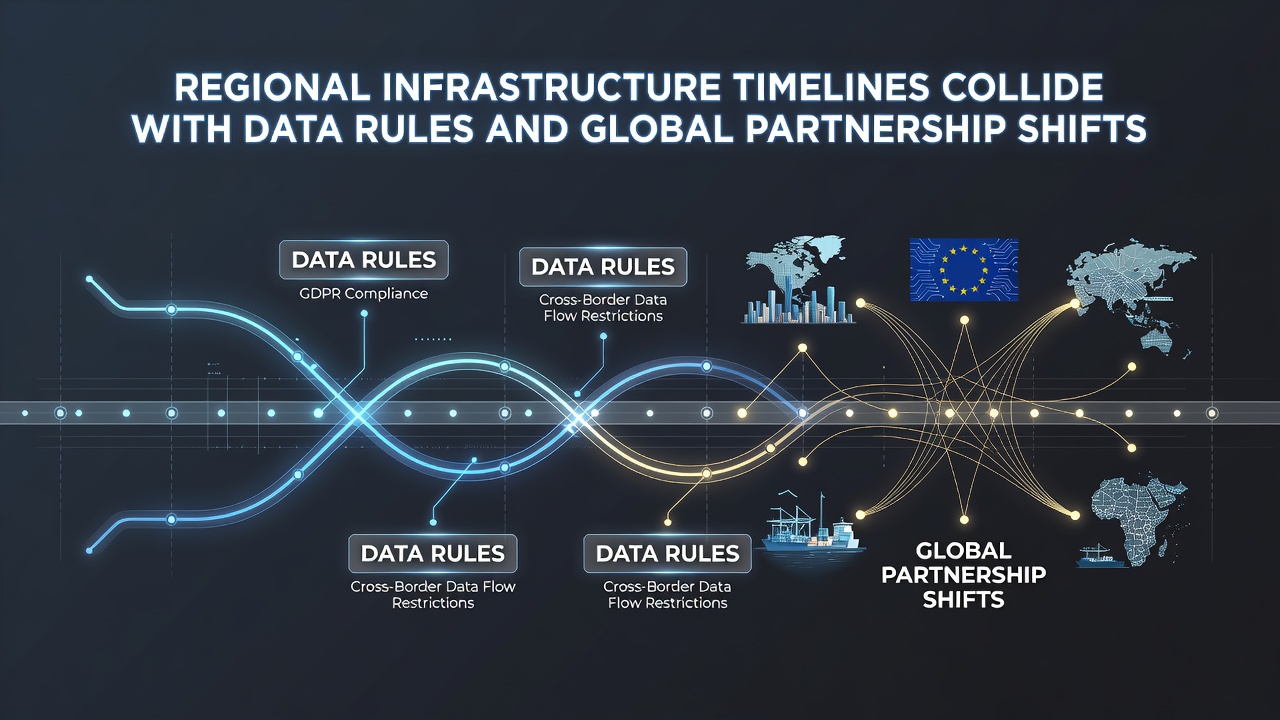
Regional infrastructure developments across multiple continents now operate under tightened schedules that intersect with evolving data protection requirements and realignments in international partnerships, according to reports from trade monitoring bodies. Projects in transportation networks, energy grids and digital connectivity face completion targets set years earlier yet must adapt to new rules on cross-border data flows that emerged after 2023 trade revisions. Observers note that these overlaps create coordination challenges for governments and private contractors who manage both physical builds and information security protocols simultaneously.
Infrastructure Schedules Meet Updated Data Standards
Many regional initiatives launched between 2020 and 2022 carried five-year horizons that now extend into 2026 and beyond, while data regulations continue to expand in scope. The European Commission updated its data governance framework in 2024, requiring stricter localization measures for infrastructure-related datasets that include sensor readings from smart transport systems. Similar adjustments appear in Australian federal guidelines on critical infrastructure information sharing, which took effect in mid-2025. Contractors working on highway expansions in Southeast Asia report that they must now segment project data to satisfy both local statutes and partner nation requirements before equipment orders finalize.
Research from the Organisation for Economic Co-operation and Development indicates that at least 18 major projects across Europe, North America and the Asia-Pacific region encountered timeline extensions of six to eighteen months due to these layered compliance steps. Data shows that energy pipeline upgrades in Canada, for instance, required additional review periods after new federal privacy amendments aligned with international trade pacts. Those adjustments occurred without altering original budget allocations in most documented cases.
Shifting Global Partnerships Influence Project Delivery
Partnership frameworks between nations have undergone measurable shifts since 2023, affecting supply chains that support regional builds. Trade agreements signed in 2024 between the United States, United Kingdom and several Indo-Pacific economies introduced new provisions on technology transfer and data reciprocity that directly touch infrastructure procurement. These clauses require participating entities to demonstrate compliance with multiple jurisdictions before joint ventures proceed.
One study released by the World Bank in early 2026 tracked how such partnership realignments altered bidding processes for port modernization efforts in Latin America. Figures reveal that consortiums previously reliant on single-source suppliers from one region diversified their vendor lists to meet updated data-handling criteria, which in turn extended procurement phases by several quarters. Similar patterns surface in African rail corridor initiatives where Chinese and European partners adjusted collaboration terms to accommodate differing data sovereignty expectations.

September 2026 Deadlines Create Additional Pressure Points
September 2026 marks a convergence point for several overlapping milestones. Multiple regional authorities scheduled final reviews for digital infrastructure components that feed into broader physical networks, while updated data-sharing protocols from the Asia-Pacific Economic Cooperation forum reach their first compliance checkpoint. Planners in New Zealand and Chile, for example, coordinate transmission line projects that incorporate real-time monitoring systems subject to these rules. The overlap means teams must verify data flows across borders before physical construction phases close.
Industry reports compiled by the International Energy Agency note that projects meeting September targets have prioritized modular data architectures that allow incremental updates without halting site work. This approach appears in several documented European smart grid rollouts where contractors integrated compliance checkpoints at each construction stage rather than at project end.
Case Examples from Different Regions
Take one highway corridor initiative in the Baltic states that links Baltic ports to inland logistics hubs. Project leads adjusted their data management platforms in 2025 to align with revised EU directives while maintaining supplier relationships that span both EU and non-EU partners. The changes involved reconfiguring sensor networks so that location and performance metrics remain within approved jurisdictions.
Another example surfaces in Australian renewable energy zones where grid connection timelines intersect with national data security legislation. Contractors there incorporated third-party audits at quarterly intervals to satisfy both domestic regulators and international financing partners who require proof of data handling standards. These steps occurred alongside ongoing material deliveries and labor scheduling.
Conclusion
Regional infrastructure timelines continue to intersect with data rules and partnership shifts in measurable ways, as evidenced by project records and regulatory filings through 2026. Authorities and contractors respond by embedding compliance verification into standard workflows rather than treating it as a separate phase. Ongoing monitoring from organizations such as the OECD and World Bank provides updated datasets that track these adaptations across continents, allowing stakeholders to adjust procurement and scheduling processes accordingly.