Elena Richter · 21 November 2026
Evolving Trade Agreements Reshape Resource Distribution in Britain's Regional Education and Health Sectors
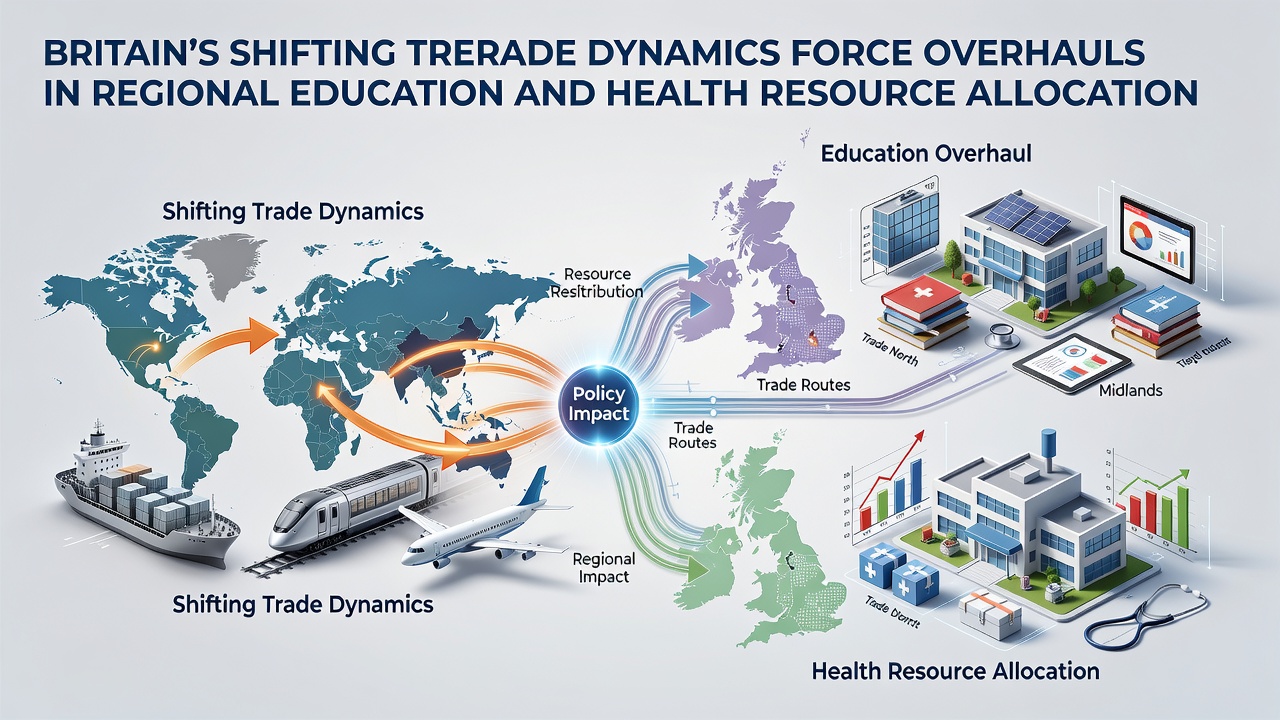
Britain's recent trade agreements with multiple international partners have introduced new economic pressures that compel regional authorities to overhaul how they allocate funds for education and health services, and observers note these changes build on patterns established after earlier deals while data collected through November 2026 shows measurable impacts on local budgets. Government statistics indicate that adjustments in tariff structures and supply chain regulations have altered revenue streams for several regions, forcing education departments to redirect spending toward skills training programs aligned with emerging export sectors.
Trade Shifts and Their Direct Effects on Regional Budgets
Officials in northern and midland areas report that revised import duties on manufacturing components have reduced certain tax inflows, which in turn affects the formulas used to distribute education grants and health service funding. According to reports from the OECD, these modifications create ripple effects where local councils must recalibrate multi-year plans to maintain service levels. Researchers at several universities have documented how export growth in technology and green energy sectors generates new demands for specialized training, prompting education authorities to shift resources away from traditional academic pathways toward vocational initiatives.
Health resource allocation faces parallel challenges because pharmaceutical supply chains and medical equipment imports now operate under different compliance regimes, and regional health boards in Scotland and Wales have begun revising procurement strategies to account for fluctuating costs. Figures released in late 2026 reveal that some areas experienced a 12 percent variance in projected health expenditures compared to pre-agreement forecasts, leading administrators to consolidate certain outpatient services while expanding others tied to workforce retraining needs.
Adjustments in Education Funding Models
Education overseers across England have responded by introducing performance-based funding models that tie allocations more closely to regional trade performance indicators, and studies from Canadian research institutions highlight similar approaches used in provinces adapting to USMCA provisions. School districts in port cities have received additional support for logistics and international commerce curricula because trade volume data shows increased activity in those corridors. Teachers and administrators note that professional development programs now emphasize language skills and regulatory knowledge to prepare students for roles created by new export partnerships.
Further modifications appear in higher education grants, where universities receive incentives to partner with industries benefiting from fresh trade routes, and evidence from Australian government analyses demonstrates comparable strategies that helped regional institutions align with Asian market openings. Data compiled through November 2026 indicates enrollment shifts toward these programs in several English regions, while traditional humanities departments have seen modest reductions in targeted funding.

Health Service Reallocations and Regional Variations
Health authorities have implemented new resource distribution frameworks that prioritize preventive care in areas experiencing workforce transitions due to trade-related industry changes, and Brookings Institution analyses of comparable North American adjustments provide useful benchmarks. Hospitals in the Midlands have expanded occupational health services for employees in export-oriented factories, whereas coastal regions have directed more funds toward maritime medicine training. These targeted reallocations reflect calculations based on employment statistics that correlate directly with sectors gaining from revised trade terms.
Regional disparities remain pronounced because devolved administrations apply different weighting to trade impact assessments when setting health budgets, and local data shows northern England experiencing faster growth in demand for mental health support linked to economic restructuring. European Commission trade monitoring reports offer additional context on how neighboring countries managed similar transitions, allowing British planners to adopt selected practices without duplicating entire systems.
Looking Ahead to Sustained Reforms
Continued monitoring of trade agreement outcomes will likely drive further refinements in both education and health funding mechanisms, with November 2026 serving as a reference point for measuring initial effectiveness. Regional bodies continue to gather input from industry stakeholders to ensure allocations track actual economic developments rather than outdated projections. These ongoing adjustments illustrate how interconnected trade policy remains with domestic service provision across Britain.
Conclusion
Britain's shifting trade dynamics continue to influence resource decisions in education and health at the regional level, and authorities maintain active oversight to balance competing demands. The patterns observed through late 2026 suggest that future agreements will prompt additional recalibrations as economic conditions evolve.